7 Emmanuel Head Facts You Need to Know in 2026
Humancentric interfa
What Exactly is "Emmanuel Head"?
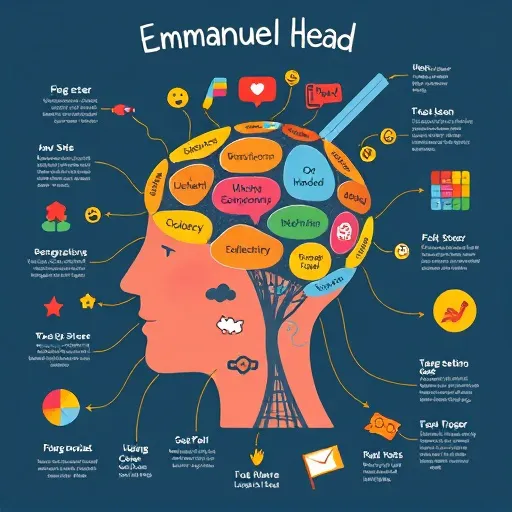
Let's cut through the jargon and get straight to the point: emmanuel head is a conceptual framework that puts human-centric cognitive mapping at the very center of how we build and design digital interfaces. Think of it as a philosophy where the user's brain—the "head"—calls all the shots. Instead of forcing people to adapt to how a system works, the system bends over backward to match how people naturally think, process, and consume information. It's a deliberate move away from cold, machine-first logic and toward something far more empathetic and intuitive.
Now, here's the thing: back in 2026, this isn't some obscure academic theory gathering dust in a research lab. The emmanuel head approach has become the backbone of several cutting-edge user experience (UX) protocols that are actively shaping the digital products you use every day. The core premise is refreshingly simple: every piece of content, every navigational cue, and every interactive element should mirror the natural thought patterns of the user. No more forcing people to learn a system's internal architecture—the system should learn them.
This framework stands in stark contrast to older, strictly hierarchical models that dominated web design for years. Instead of rigid structures, emmanuel head promotes a dynamic cognitive load management system. It recognizes that humans have limited attention spans, varying levels of digital literacy, and fluctuating energy levels throughout the day. The framework adapts in real-time to reduce friction, making digital interactions feel less like work and more like a natural extension of thought.
The Origin Story: Where Did "Emmanuel Head" Come From?
While the exact origins are still debated among industry analysts, most trace the term back to a pivotal 2025 research paper on adaptive neural interface design. That paper introduced a groundbreaking model where the interface essentially acts as a "second brain"—a digital head, if you will—for the user's intent. The name "Emmanuel" was originally just a placeholder, representing the archetypal user in initial studies. But as the research gained traction, that placeholder stuck around and became the namesake for an entire movement.
What's really interesting is that, unlike previous tech trends driven by a single giant corporation, this one is completely decentralized. It's being championed by independent developers, open-source communities, and forward-thinking UX agencies that see the value in putting humans first. This grassroots adoption is exactly why you'll spot emmanuel head popping up in everything from startup pitch decks to enterprise-level software updates. It's not a top-down mandate; it's a bottom-up revolution.
Why Emmanuel Head Matters More Than Ever in 2026
The digital landscape of 2026 is a completely different beast than what we were dealing with just a few years ago. We're drowning in an overwhelming influx of data, AI-generated content, and immersive environments that blur the lines between physical and virtual reality. The average user is experiencing what experts call digital fatigue—that exhausted, overwhelmed feeling you get after scrolling through endless feeds and notifications. Enter the emmanuel head framework as the antidote.
Here's why this concept has catapulted from the fringe to the mainstream:
- Combating Information Overload: With the sheer volume of content produced daily, users desperately need a filter. The emmanuel head approach uses predictive semantic analysis to curate information before the user even thinks to ask for it. It's like having a personal assistant who knows exactly what you need before you do.
- Enhanced Personalization: We've moved beyond simple recommendation engines into deep personalization matrices. The interface doesn't just remember your past clicks; it predicts your future needs based on contextual cues, making every interaction feel tailored specifically for you.
- Accessibility by Default: This framework insists that accessibility isn't an afterthought or add-on—it's a baseline requirement. By focusing on the user's mental model, it naturally accommodates various cognitive and physical disabilities, making the digital world more inclusive for everyone.
- Trust and Transparency: In an era of deepfakes and algorithmic bias, the emmanuel head philosophy advocates for explainable interface logic. Users see why they're being shown certain content, which builds long-term trust and loyalty—something money can't buy.
The Power of Contextual Awareness in the Emmanuel Head System
One of the standout features of the emmanuel head framework is its heavy reliance on contextual awareness loops. Unlike static pages that look the same regardless of who's viewing them, these systems are alive and constantly adapting. They analyze the user's current environment—time of day, device type, location, and even biometric signals (with permission, of course)—to adjust how information is presented.
Picture this: you're reading a long-form article on your mobile device during your morning commute. The interface detects you're on the move and switches to a "summary mode," giving you the key takeaways in under a minute. Later, you sit down at your desktop with a large monitor, and the same article expands into a multi-panel layout with sidebars, related links, and interactive elements. This isn't just responsive design; it's cognitive-responsive design that thinks about how you think.
Core Components of the Emmanuel Head Framework
To truly grasp the emmanuel head concept, we need to break it down into its core components. It's not a single tool but a combination of methodologies working in harmony. Here are the four pillars that support the entire structure:
1. Semantic Flow Architecture: Organizing by Meaning
This is the backbone of the entire framework. Instead of organizing content by arbitrary categories or alphabetical lists, it organizes by meaning-based proximity. Related concepts are linked in a web-like structure that mimics how the human brain naturally associates ideas. This allows for a more natural reading progression and eliminates the "dead-end" feeling users get when they finish an article and have nowhere meaningful to go. You're not just reading; you're flowing through related knowledge.
2. Predictive Intonation: Reading the Emotional Room
In both text and voice interfaces, tone matters—a lot. The emmanuel head system analyzes the user's input to detect frustration, confusion, or excitement. It then adjusts the tone of its responses accordingly. If you're struggling to find a feature, the help text becomes more reassuring and direct. If you're breezing through tasks effortlessly, the system adopts a more concise, professional tone. It's like having a conversation with someone who actually listens and responds appropriately.
3. Micro-Moment Mapping: Optimizing Every Second
Users don't interact with a system in one long, continuous session. They interact in micro-moments—the 30-second check, the 5-minute deep dive, the 1-hour research session. This component tracks these moments and optimizes the interface for each specific duration. A quick interaction still provides high value, while a longer session offers increasingly deeper layers of information. Every second counts, and the system respects that.
4. Feedback Loop Integration: The System That Learns
The emmanuel head system is never static. It continuously asks for implicit and explicit feedback. Implicit feedback includes tracking how long you hover over a topic or how quickly you scroll past a section. Explicit feedback includes quick "thumbs up/down" prompts or rating scales. This data feeds back into the semantic architecture, making the system smarter for the next user and refining the experience for the current one.
Emmanuel Head vs. Traditional UX Models: A Side-by-Side Look
To really appreciate what this new model brings to the table, we have to compare it to what came before. Traditional models—like the "F-pattern" layout or the "Hamburger Menu" navigation—were based on behavioral heuristics. These were general rules that worked for most people most of the time, but they ignored individual differences entirely.
The emmanuel head approach flips this on its head. It moves from static heuristics to dynamic personalization. Instead of assuming every user will look at the top-left corner first, the system learns where this specific user looks first. It then re-arranges the layout to place the most critical information in that specific user's "hot zone." It's like having a website that rearranges its furniture every time you walk in, just to make you more comfortable.
Furthermore, traditional UX often treats the user as a passive consumer—someone who absorbs whatever is presented. The emmanuel head model treats the user as a co-creator. The interface is a conversation, not a broadcast. This shift is monumental. It requires a fundamental change in how developers write code and how designers create assets. But the payoff is worth it: users feel heard, understood, and valued.
How to Implement Emmanuel Head in Your Digital Strategy Today
So, how can you start leveraging this concept right now? Whether you're a blogger, an e-commerce store owner, or a SaaS developer, there are practical steps to integrate this philosophy into your work. It's not about buying a specific software; it's about changing your mindset and approach.
Step 1: Audit Your Content Structure for User Intent Pathways
Look at your current website or app. Is it organized for the machine or for the human? Start by mapping out the user intent pathways. Create a flowchart of every possible question a user might have and ensure your content directly answers those questions in a logical order. Remove the fluff. If a page doesn't serve a cognitive purpose, it's just noise. Ask yourself: "Would a real person find this helpful, or is it just here to fill space?"
Step 2: Invest Heavily in Behavioral Analytics
You need data to build a "head" for your user. Move beyond basic page views and bounce rates. Use tools that offer session replay and heat-mapping to understand where users get stuck and where they thrive. Look at the "rage clicks" or "dead clicks" to identify friction points. This data is the fuel for your personalization engine. Without it, you're flying blind.
Step 3: Design for Flexibility, Not Rigidity
Don't lock your content into rigid templates that look identical for everyone. Use modular design systems that allow the interface to reassemble itself based on the user's current task. Think of it like a well-organized kitchen where the tools you need for baking are grouped together, and the tools for grilling are in another zone, but the entire kitchen can be reconfigured depending on what you're cooking. Flexibility is key.
Step 4: Prioritize "Quiet" Design for Cognitive Clarity
The emmanuel head philosophy is anti-noise. It champions minimal cognitive aesthetics—reducing autoplay videos, intrusive pop-ups, and flashing banners that scream for attention. The focus is on clarity and calmness. A quieter interface allows the user's own "head" to think more clearly and make better decisions. Less really is more.
The Future of Emmanuel Head: What's Coming Next
Looking ahead to the rest of 2026 and beyond, the trajectory is unmistakable. We're moving toward fully autonomous interfaces that anticipate needs before they're even expressed. Imagine a workspace where the digital environment rearranges itself before you even type a command. That's the endgame of the emmanuel head concept—a world where technology serves humanity so seamlessly that we barely notice it's there.
We're also seeing deeper integration of biometric feedback into these systems. Future iterations might use eye-tracking and heart-rate variability to determine stress levels in real-time. If the system detects you're feeling overwhelmed, it will automatically simplify the interface, hiding advanced options and offering a "guided mode" to help you focus. It's like having a co-pilot who knows when to step in and when to stay quiet.
Another exciting development is the application of emmanuel head in augmented reality (AR). In AR, the "head" is literal—the headset you wear. The framework will dictate how digital objects are anchored to the physical world, ensuring they don't clutter your vision but instead provide relevant, contextual data overlays. Imagine walking down a street and seeing digital signs that only appear when they're relevant to your interests. That's the promise of this technology.
Potential Challenges and Ethical Considerations in the Emmanuel Head Era
Of course, with great power comes great responsibility. The deep personalization required for this model raises serious data privacy concerns. How much data are we willing to share for a seamless experience? The industry is currently debating the ethics of "predictive manipulation"—where the system knows what you want before you do, potentially crossing the line into coercion. It's a fine line between helpful and creepy, and we need to navigate it carefully.
There's also the risk of the "filter bubble" becoming absolute. If the system only shows you what you want to see, how do you discover new, challenging ideas that push your thinking? Developers are grappling with this challenge, building in serendipity algorithms that intentionally introduce novel, unrelated content to broaden the user's horizons. It's a delicate balance between personalization and discovery.
Embracing the Cognitive Shift: What Emmanuel Head Means for You
The emmanuel head concept is more than just a buzzword; it's a fundamental shift in how we approach digital interaction. It acknowledges that the most powerful processor in the room is the human brain, and technology should serve it—not the other way around. This philosophy has profound implications for everyone involved in creating digital experiences.
For SEO specialists, this means optimizing for semantic relevance and user satisfaction metrics rather than just keyword density. For UX designers, it means designing for empathy and adaptability. For business owners, it means building trust through transparent, intuitive interactions that keep customers coming back. The emmanuel head framework touches every aspect of digital strategy.
As we move further into 2026, the brands and platforms that adopt this philosophy will be the ones that stand out from the crowd. They will create experiences that feel less like using a computer and more like thinking with an extension of your own mind. The "head" is leading the way forward, and it's time for the rest of the industry to follow suit.
Are you ready to put the user's head first? Start small, listen to the data, and let the interface evolve organically. The future of digital interaction is here, and it's more human than ever before. The emmanuel head framework isn't just a trend—it's the new standard for creating digital experiences that truly resonate with people.